

For local small business owners and solo content creators, AI marketing content can be a relief: the blank page disappears and posts, emails, and ads come together fast. The tension is that speed can also produce the same polished, generic voice everyone else is using, which quietly chips away at authentic branding and brand consistency. That risk grows when AI-generated visuals start drifting from the look and feel customers already recognize. With a simple, practical game plan, small teams can keep AI working like an assistant while the brand still sounds like itself.
Quick Takeaways for AI-Powered Marketing Content
Start by defining your audience, goal, and brand voice before prompting AI.
Use prompt engineering to guide tone, structure, and details for more usable drafts.
Edit with a human eye to add accuracy, personality, and trust-building authenticity.
Align every output with your branding to keep messaging consistent across channels.
Choose creative tools intentionally based on your workflow, content type, and quality needs.
Create On-Brand Marketing Images With Text-to-Image (Without Guesswork)
If you can steer the words in an AI draft, you can steer the visuals, too, without settling for “close enough” graphics. With an AI text-to-image tool, you describe the image you want in plain language, then let the model generate options you can refine. The key is specificity: spell out the subject (what’s in the scene), the style (e.g., clean product photography vs. illustrated), your color palette, the lighting (soft daylight, dramatic studio, warm indoor), and the composition (close-up, wide shot, centered, lots of negative space for text). Those details help the tool aim for your brand’s look instead of a generic, one-size-fits-all result.
Expect to iterate. Small prompt tweaks, changing a color, adjusting lighting, or shifting the camera angle, can dramatically improve polish and help you explore multiple distinct directions before you pick the one that best matches your creative vision. If you want a place to learn more about how text-to-image prompting works can make the experimentation feel less like guessing.
Turn AI Drafts Into On-Brand Marketing Content
This is the same draft and refine approach, just applied to every format you publish. You will use AI for speed, then add the human details that make customers trust your message.

Step 1: Capture your “real life” inputs first
Start by writing down your audience, offer, and one true detail only you would know, like a customer question you hear weekly or a guarantee you actually honor. Add any must-use facts such as pricing, hours, and locations so the draft cannot drift. These inputs prevent generic copy because the AI has something specific to aim at.Step 2: Prompt for structure, not perfection
Ask for a clear output type like an Instagram caption, a 150 word email, or a one-page flyer, then include the goal, tone, and a short list of points to cover. Many AI writing tools let you set tone and length, so use those controls early instead of fixing sprawl later. Generate two to three options so you can pick the strongest bones.Step 3: Edit like a parent checking homework
Do a quick first pass for accuracy: remove claims you cannot prove, confirm dates and prices, and delete anything that feels copied and vague. Then do a second pass for clarity by shortening long sentences, swapping buzzwords for everyday language, and adding one concrete example or mini story. Read it out loud once to catch stiff phrases.Step 4: Lock in brand voice with a mini style card
Write a short brand voice note you can paste into prompts: who you serve, what you stand for, and three words that describe your tone. The unique personality and style you choose should show up in greetings, word choice, and how you handle objections. Keep a short “say this, not that” list so every draft stays consistent.Step 5: Match tools to the format and add human finishing touches
Choose tools based on the final deliverable: writing assistant for text, design templates for social graphics, and text to image for original visuals, then keep the same message across versions. Add small human signals like a local reference your customers recognize, an honest limitation, or a behind-the-scenes line about how you do the work. Finish with one clear call to action that fits the channel.
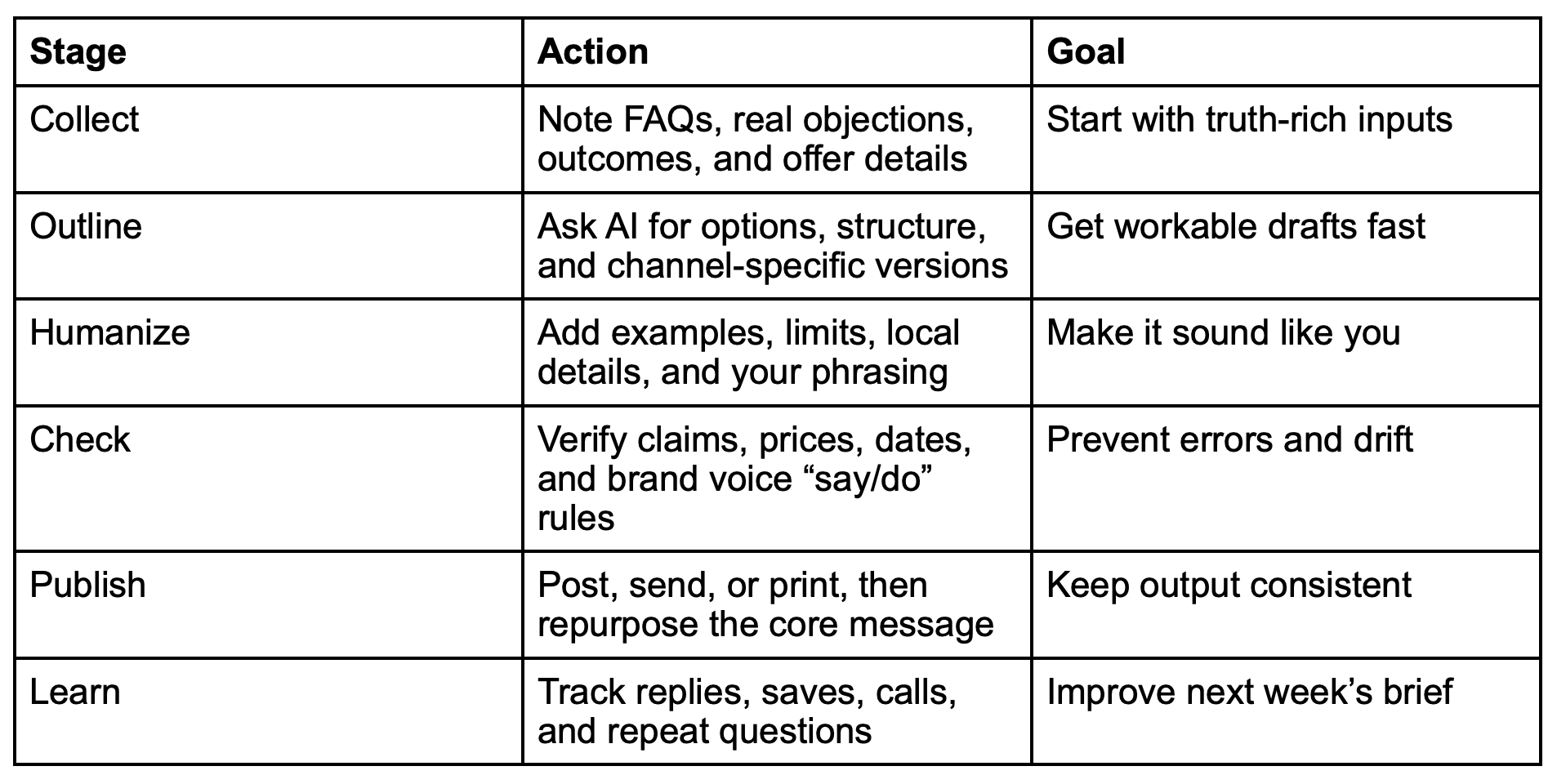
A Simple Weekly Loop You Can Actually Keep
To keep these steps sustainable, use a light, repeatable rhythm. The point is not to “be everywhere” but to ship one strong core message, then adapt it across channels without losing your voice. A consistent loop also reduces decision fatigue, so marketing still happens during busy weeks, and the quality stays steady.
Because each stage feeds the next, you are never starting from zero. Over time, the loop gets quicker, and automation can help you move faster, with some teams seeing 40% faster time-to-publish when routine steps are systemized.
Turn AI Prompts Into On-Brand Marketing You’ll Actually Use
Small businesses need to show up consistently, but time is tight and “AI content” can sound like everyone else. The approach here is a simple loop: let AI help you draft fast, then apply clear brand standards and a human review so the message stays true. When implementing AI techniques this way, AI marketing takeaways turn into creative marketing empowerment, more output without losing brand authenticity or small business creativity. Use AI for speed, and your standards for trust.
When you’re ready to ditch the AI images and flyers, hit me up and we’ll create some authentic content that actually reflects you and your brand.