
Startup founders and early-stage companies often hit the same snag: marketing creates interest, sales tries to close it, and the space between them turns into a leak. Marketing and sales friction shows up as mixed signals, slow follow-up, and lead handoff challenges where no one is quite sure what “qualified” means or who owns the next step. When the revenue team alignment is off, good leads go cold, pipelines get noisy, and the team starts blaming the wrong problem. Spotting where the handoff breaks down is the first step toward a cleaner, more predictable revenue engine.

Build Cross-Team Leadership That Makes Alignment Stick
As the owner, the fastest way to tighten marketing–sales alignment is to get sharper at cross-functional management: defining who owns each part of the workflow, how decisions get made, and what “done” looks like at the handoff. An MBA builds those strategic, big-picture skills so you can coordinate teams like one revenue engine instead of two groups pulling in different directions. If you want a structured path that adds context to that kind of leadership development, an online MBA option that lets you keep running the business while you learn. With that leadership foundation in place, you can lock in the practical alignment anchors, shared goals, unified messaging, and clear lead criteria.
Understanding Marketing and Sales Alignment
Marketing and sales alignment means both teams agree on the same destination and the same directions. That starts with shared revenue goals, then tightens up with unified messaging, and gets practical with clear lead qualification criteria. A good lead qualification process makes the handoff feel clean instead of awkward.
This matters because mixed goals create mixed behavior. Marketing may chase volume while sales needs fit, and the buyer feels the disconnect in every call and email. When both teams use the same definitions and story, you waste less time and close more of the right deals.
Think of it like a home remodel with two crews. If one team measures in inches and the other eyeballs it, nothing lines up. When both follow the same plan and prioritize folks with a high possibility of buying, the work moves fast and stays tidy. With alignment set, a consistent look and feel keeps every touchpoint working together.
Make Brand Visuals Do the Heavy Lifting

Once marketing and sales agree on the message, the fastest way to keep it consistent is to make sure they’re showing the same story, too. Aligned teams need a shared, intentional library of brand visuals, photos, product shots, lifestyle imagery, and on-brand assets that both sides can pull from without guesswork. When marketing uses one look and sales grabs whatever happens to be in a slide deck from three months ago, prospects feel the disconnect immediately: the promise on the website doesn’t match the demo, the case study doesn’t look like the product page, and trust takes a hit.
If you need help creating cohesive visual content with intention, Holly Birch Photography offers strategic brand, commercial, and product photography sessions that include in-depth planning around your brand story, messaging gaps, and specific content needs, so startups end up with a usable set of visuals that both marketing and sales can deploy.
Plan → Route → Track → Review
A good handoff workflow keeps leads moving with less back-and-forth and fewer “what happened to this one?” meetings. It turns your shared story into clear actions: who owns the lead, what happens next, and how both teams learn from outcomes.
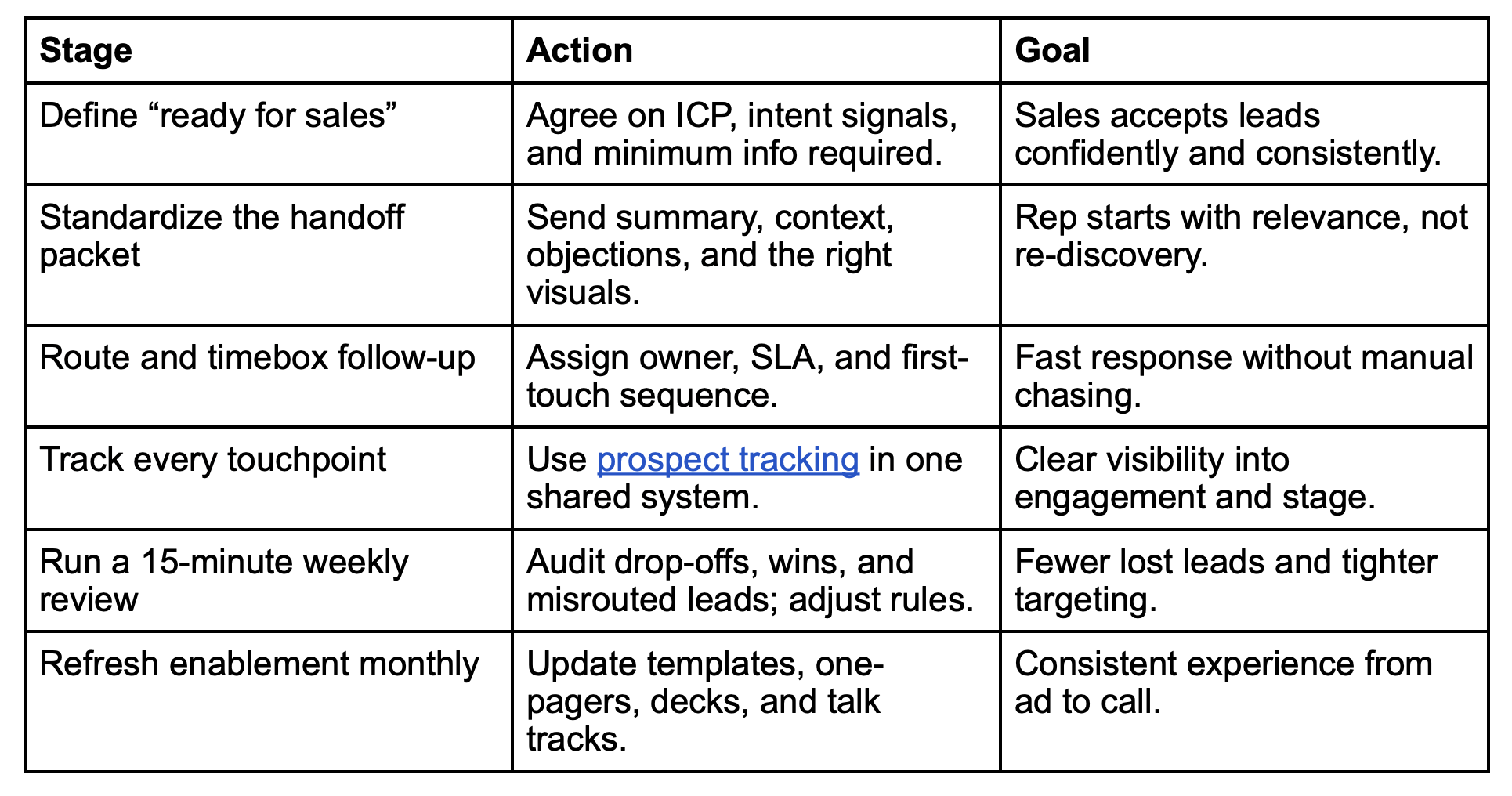
Treat it like a home maintenance routine: small, scheduled check-ins prevent big, messy repairs later. When definitions, routing, and tracking are steady, reviews become quick decisions instead of long debates.
Revenue Team Unification: Questions Founders Ask

Q: How do I reduce friction without scheduling more meetings?
A: Replace opinions with a short, shared scoreboard: response time, stage-to-stage conversion, and top disqualifiers. Log issues in one place during the week, then resolve only the highest-impact items in a time-boxed 15 minutes. Most “conflict” fades when the same numbers guide decisions.
Q: What should marketing and sales agree on first?
A: Start with one definition: what “sales-ready” means in plain language. Write down the must-have fields and the intent signals that justify outreach, then treat anything else as nice-to-have. This keeps reps from re-qualifying and keeps marketing from guessing.
Q: How can we set expectations so leads don’t go cold?
A: Use a simple SLA: who owns first touch, how fast, and what happens if it’s missed. Make the fallback automatic, like re-routing after a set time, so no one has to nag.
Q: When does it make sense to use RevOps in a startup?
A: If you are repeating the same handoff mistakes, it’s time to unify the system, not just “align” people. The idea behind unifying your internal operations is that every step supports one revenue engine with shared rules.
Q: Can tools actually improve alignment, or is this just a process problem?
A: Tools help when they enforce the process you already agreed to, especially around routing and visibility. Teams that adopt a revenue operations platform often do it to keep data, ownership, and follow-up consistent across the funnel.
When marketing and sales run as one revenue team—with shared goals, shared definitions, and shared assets—leads stop leaking in the handoff and the buying experience feels consistent from first click to close. Tighten alignment with a clear qualification bar, a standardized handoff packet, fast follow-up rules, and short weekly reviews, and you’ll turn “more leads” into more wins—with less friction on both sides.